 Powering your life with all available resources
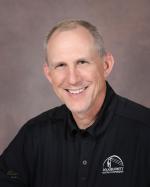
by General Manager Steve Stroshane
Our number one priority is delivering safe, reliable electricity to meet the needs of our members and community.
Last month, our newsletter explained the coordinated system of grid power players who work together to keep your lights on. In most cases, it begins with power generation by Dairyland Power Cooperative, our wholesale power provider. Once electricity is produced, it travels long distances across high-voltage transmission lines to reach local substations. That's where we come in. Polk-Burnett delivers electricity from the substations, across local distribution power lines, to your homes, farms and businesses. New for members is local solar, above is the ribbon cutting at Viola Solar, which began generating power in December 2025.
This month, I'd like to share more about how your power is generated and why a balanced energy mix is important.
Reliable Energy
A balanced energy mix means using all available energy resources—including coal, natural gas, nuclear and renewables—to produce electricity. Instead of relying on one single resource, our power providers use a variety of resources to meet energy needs at all times of the day and year. Different energy sources perform differently in different conditions. A balanced mix ensures that electricity is available when you need it.
For example, solar and wind energy are an important and growing part of our power supply, but they are intermittent and depend on the sun to shine and the wind to blow.
Because renewable energy output varies with weather and time of day, we need dispatchable resources to keep the grid reliable.
Dispatchable resources are most often natural gas power plants; they can be turned on or adjusted as needed to maintain reliability.
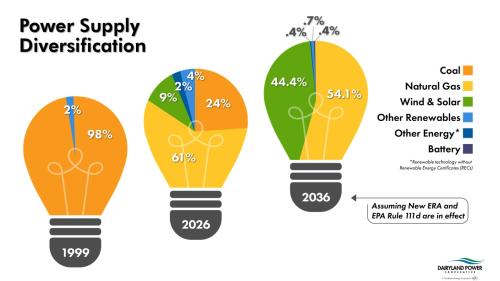 Dairyland Power Cooperative owns and operates five natural gas plants with a generation capacity of 1,800 MW. Three of the five were added to their generation fleet in 2025-26. Energy from natural gas plants feeds into the power grid to support renewables, sustainability and reliability.
Traditional baseload power refers to generation resources like coal and nuclear plants that run continuously, 24/7, to meet electricity demand on the power grid. Dairyland's J.P. Madgett Station is a 387-MW coal plant in Alma, WI. Baseload power plants produce steady, reliable energy around the clock, but cannot be ramped up or down quickly.
Dairyland is also exploring small modular reactors (SMRs) as a potential option for the future. SMRs generate zero-carbon electricity using nuclear fission to create heat and power steam turbines. While commercial use is most likely a decade away, SMR development is supported by the power sector, private industry and government agencies. There is also public support for nuclear energy in America.
Today, your power supply includes all available resources—baseload, dispatchable and renewables. Some are steady and some help fill the gaps. Reliability means having enough power available every moment of the day.
Affordable Energy
A balanced energy mix goes beyond reliability. It also helps manage energy costs by using lower-cost resources when available. Overreliance on any single resource exposes Polk-Burnett and our members to price volatility on the energy market, which is influenced by weather, fuel costs and grid limitations (such as transmission line congestion, maintenance outages at power plants or prioritizing natural gas for residential heating).
Clean and Sustainable Energy
With today's technology, renewable energy is expanding locally and nationally, reducing carbon emissions over time while preserving reliability with baseload and dispatchable sources. In addition to utility-scale solar and wind, Dairyland's resource portfolio includes three hydroelectric stations and two landfill-gas plants.
Here in Polk-Burnett's service area, four local solar arrays provide clean power, as well as operational and financial benefits for co-op members.
SunTuria Solar, Centuria, 2017
Georgetown Solar, Balsam Lake, 2023
Luck Solar, Luck, 2025
Viola Solar, Webster, 2025
Investing in local solar helps us become less reliant on the energy market and strengthens grid reliability for co-op members.
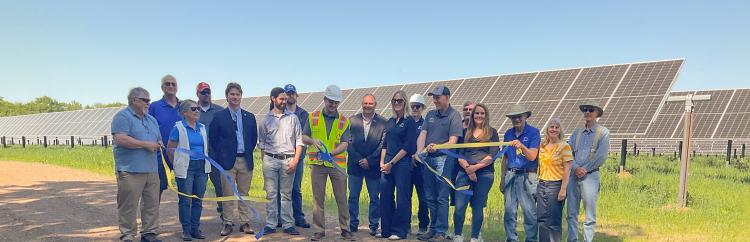
Above: In May, we dedicated Viola Solar, the first utility-scale solar in Burnett County. The 2.5 MW array is located just north of Highway 70 between Siren and Hertel. The 13-acre site has 5,200 panels that operate on a tracking system to follow the path of the sun. Solar output feeds into Polk-Burnett's distribution system at nearby Hertel Substation to benefit co-op members. Viola Solar was developed by Madison-based OneEnergy Renewables. Polk-Burnett will purchase the energy at a fixed rate for 30 years. The dual-purpose space provides energy for about 600 homes, as well as acres of restored pasture and prairie ecosystem.
Viola Solar generates local power to benefit co-op members.
The array relieves high summer demand at Hertel Substation and offsets power market costs.
A balanced energy strategy by both Dairyland Power Cooperative and Polk-Burnett Electric Cooperative delivers electricity that is reliable, affordable and sustainable.
Read more about energy supply and Cedar Lake Substation, energized Dec. 2025